


There are spots along Skyline Blvd where the trail crests and the world opens. On the ridge the Santa Cruz Mountains drop east and west. To one side, the southern end of the bay. To the other, The Pacific. On a clear day you can see it all. On a foggy one you can’t see past the madrones. Honestly, the foggy days hit harder.
I go up there to run. That’s the intention, anyway.
The trail along the ridge alternates between wide open grassland, and tight redwood canopy where the light goes green and the temperature drops and everything gets quiet fast. You move back and forth between those two worlds. It keeps you honest.
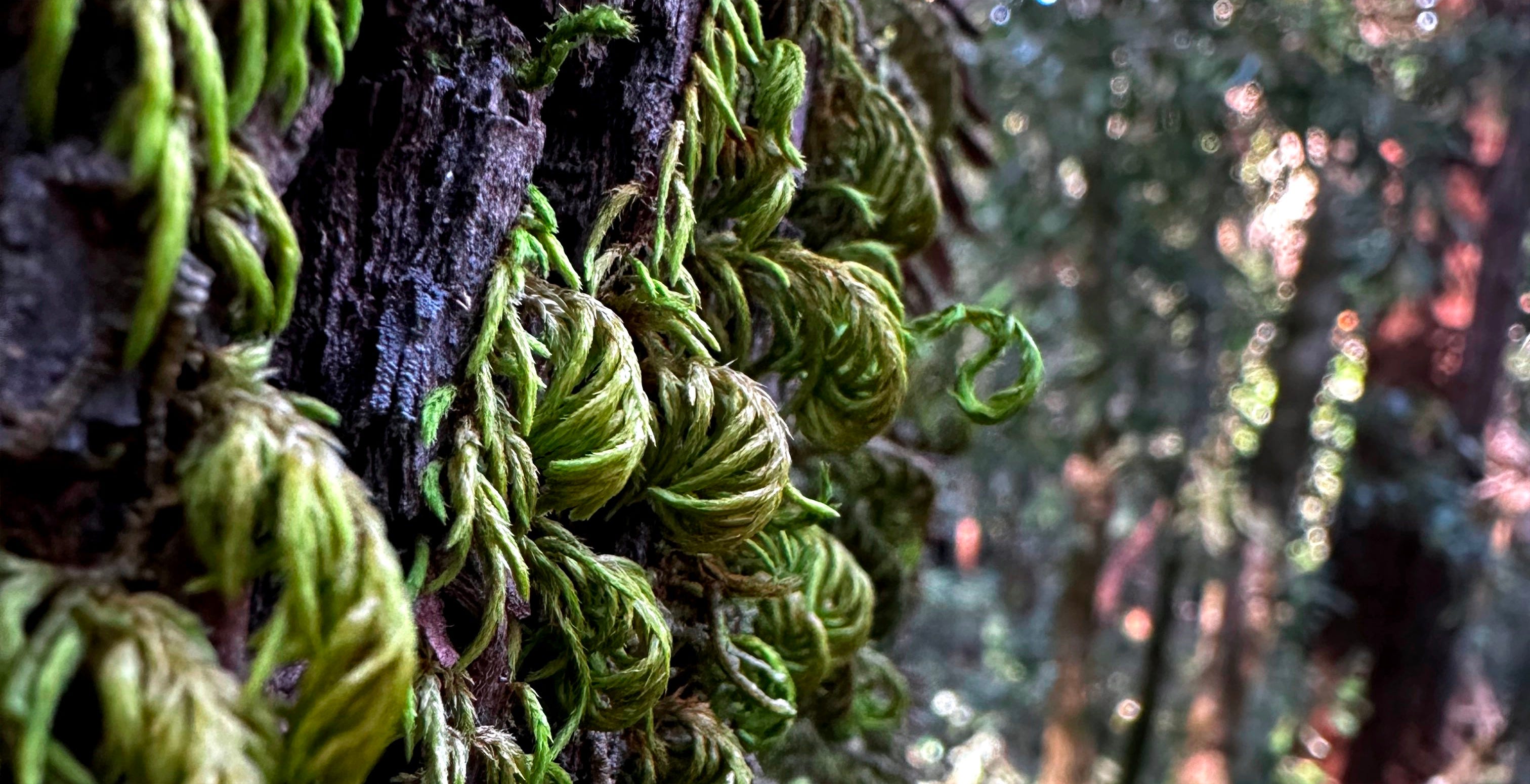
I stopped mid-run a few weeks ago. Not for anything dramatic. Just moss. The bark of a redwood covered in it, each frond curled into a tight spiral. Hundreds of them. I took a picture. I got close. Closer than you do when you're trying to keep a pace. Stood there for a good five minutes.
At the base of the tree sat a banana slug, easily six inches long, moving at a very different pace. The tree had been there for centuries. Neither of them needed me to show up and notice them.
I noticed them anyway. I think I was trained to.
I grew up in Indiana. No redwoods. No banana slugs. But we had trees. At least a few trees. A strip of “woods”, we called it, maybe 100 feet deep. Skinny enough, that in winter you could see right though to the other neighborhood. But enough to get lost in summer. It ran along the back of the whole neighborhood block. Technically owned by the neighbors whose yards touched it. In practice, nobody treated it that way. The kids just roamed. In and out of everyone’s yard, through the whole stretch. Nobody asked permission. (Now that I think about it, I bet our parents did.) It was just understood.
We built forts back there. Played games with no rules we could explain. Spent whole afternoons with nothing to show for it. At the time it felt like goofing off. Looking back it was something else. Learning how to pay attention to a place. How to be inside something without needing to control it.
That’s still what the ridge gives me.
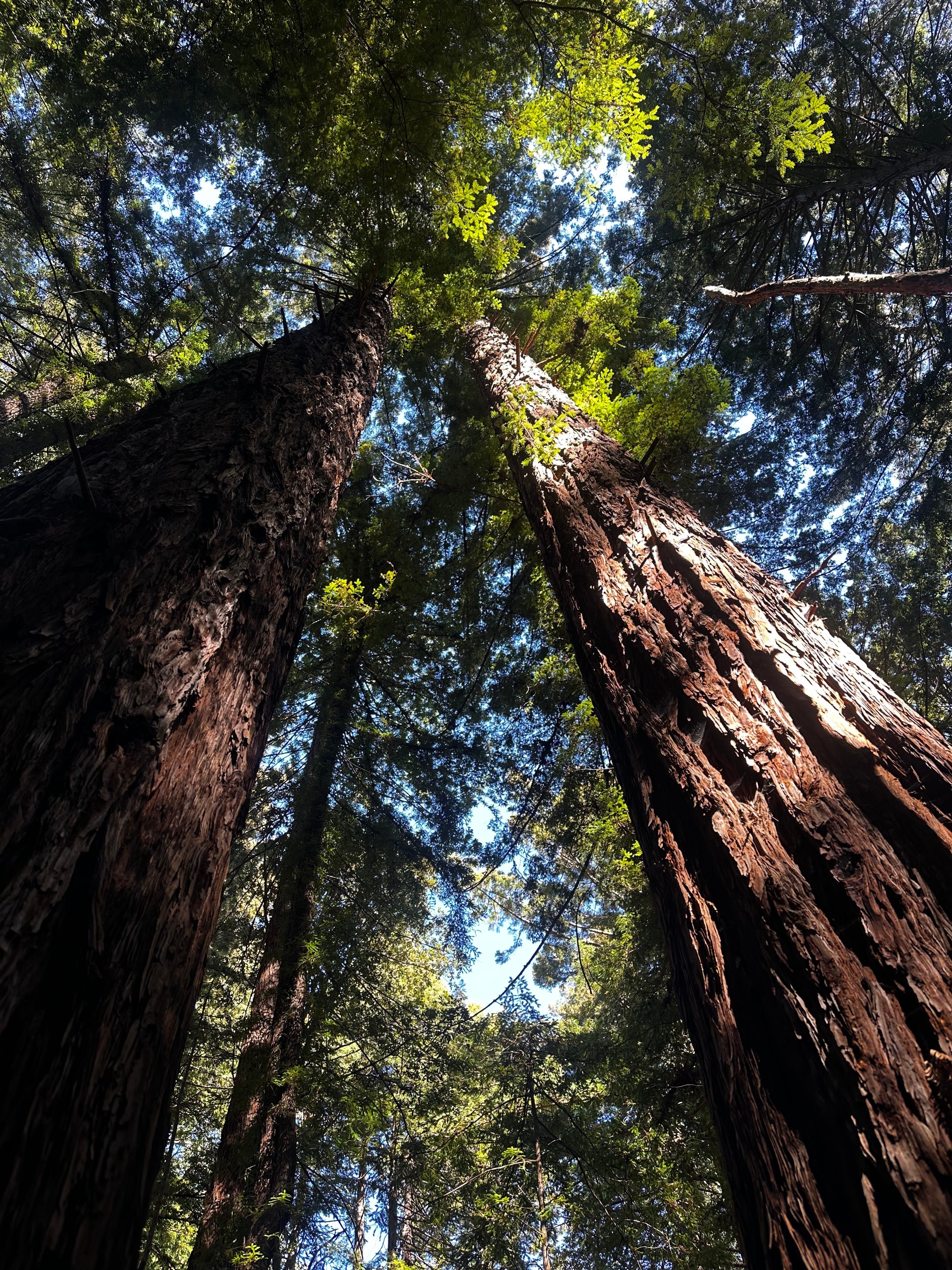
I don’t think its an escape. More of a recalibration. I show up carrying whatever I’ve been carrying and the trail absorbs it without comment. The fog comes in off the coast like clockwork. The vultures read the thermals. The banana slugs do whatever they do. The moss keeps curling on the bark whether anyone stops to look at it or not.
I come up here to remember that the story was already going before I got here.
It’ll keep going after I leave.
But I also think about those kids on the block. The ones who had a strip of trees and a few unstructured hours and nothing else. That was enough. It didn’t have to be a redwood forest or a ridge above the Pacific. It just had to be outside. It just had to be real. A creek, a vacant lot, a neighbor’s backyard. Anything that operates by different rules than the ones indoors. Kids don’t need the perfect wilderness experience. They just need a place where they can slow down, pay attention, and figure out that the world is bigger and quieter and more interesting than whatever is happening inside.
That instinct, once it takes root, doesn’t go away. It grows. A backyard becomes a trail. A trail becomes a ridge. A ridge becomes something you can’t imagine not having. And once you’ve felt that, once a place has stopped you mid-run and made you stand still in front of a tree for five minutes, you start to understand why it’s worth protecting.
That’s what conservation is really building. Not just wild places. The people who will care about them.
So, give them the trees. Any trees.
Thank you for reading! Wild places don’t come back. Conservation Current tracks the policies, projects, and decisions eating away at America’s public lands, and holds the energy industry accountable when it takes the easy path over the right one. I believe in cleaner energy but only if it’s in the right place.
I write this, build this, and fund this myself. If you find any value in this, a coffee goes a long way.
Check out The Conservation Current Public Land Policy Tracker surfaces the five most impactful open comment periods and regulatory actions on federal public lands. Ranked by scale, irreversibility, and deadline urgency. Updated weekly.
Please check it out.