


September 2026 was a milestone month for geothermal. In Utah, Fervo’s Cape Station produced the first utility scale power to the grid with an enhanced geothermal system (EGS). Just five weeks prior, geothermal leases sold for a record amount per acre. In just ten years the price per acre went from single digits to 4 figures. There was another lease sale on October 20th. Not every sale is a windfall: Nevada’s Oct. 20 auction brought in $4.8 million for about 187,000 acres, roughly $26 an acre, with more than a third selling at the $2 minimum.
In 2019, about 75% of federal geothermal parcels sold for the minimum bid. This year, less than 20%.
This is something that geothermal enthusiast have wanted for decades. It currently produces only 0.4% of our electricity generation, but demand and prices to lease are increasing significantly. So whats happening, and how will this impact public land?
The Good News
It’s mostly good news. But if we want it to continue being good news we need to influence choices being made today.
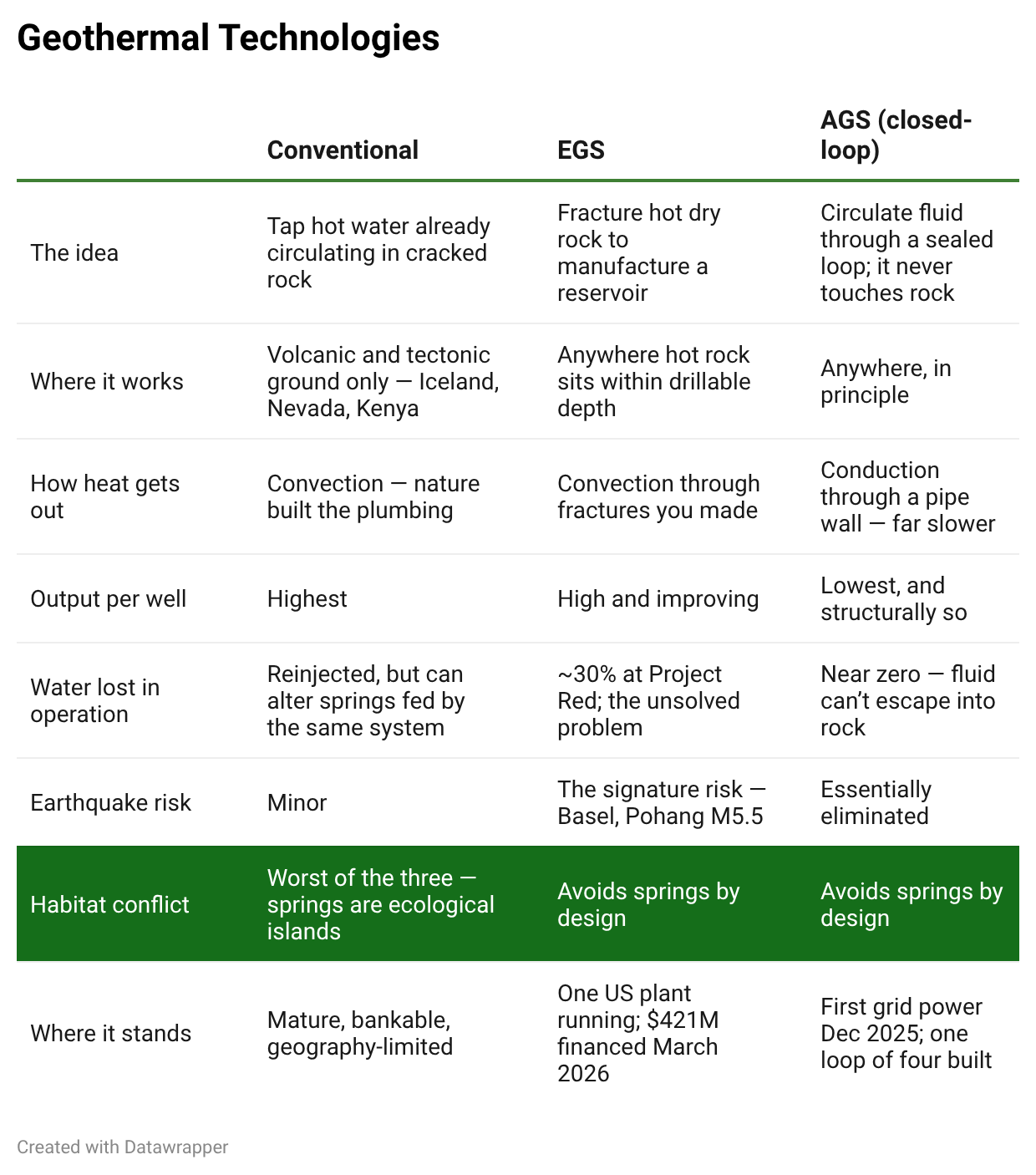
Geothermal is an around the clock power producer with a relatively small footprint. About 0.3 acres per megawatt at full buildout compared to 2.9 - 4.2 acres per megawatt for solar and because geothermal runs 24/7 the gap is wider per unit of electricity produced. Fervo’s Cape Station produces 33 megawatts today with 500 megawatts planned by 2028. Once complete it has the potential to cover 631 acres and generate 2 gigawatts. 148 acres on public land
Additionally, geothermal is much friendlier to the environment compared to natural gas. With much less greenhouse gas footprint compared to burning gas, and it avoids spills and methane leaks of the gas supply chain.
The cost is also decreasing. Fervo was able to cut the cost per well in half between its first and last well.
The politics of this technology pretty much see eye-to-eye. Trumps OBBBA cut tax credits for wind and solar and kept the ones for geothermal throughout 2033.
I have a full breakdown of Geothermal vs Oil and Gas documented on my website. Across 36 markers geothermal is better for the environment on 16 compared to 5 for O&G. 15 of them are considered “No difference”. Go check it out if you would like to learn more.
That’s mostly why the money is moving towards this technology, the other part is because of tech companies. Google purchased 396 megawatts from Fervo in September. Other companies are signing contracts for round the clock power.
The Honest Part
Every energy extraction technology has a cost. It may be less or better but we cant be blind to impacts.
First, EGS drills the same way as fracking, which means there is a chance of earthquakes, the release of hydrogen sulfide and carbon dioxide, or brine falling into water.
Then after drilling is complete, EGS is not a perfect closed loop system. There is an estimated 10% loss of water that is injected into the rock and stays there, this was tested near the Fervo site, by Utah’s FORGE (Frontier Observatory for Research in Geothermal Energy). So, the impact, water that is lost in the system must be replaced.
Finally, this technology is still expensive to build. It cost Fervo about $7,000 per kilowatt of capacity, while the goal by 2030, set by the Department of Energy, is $5,000.
The next logical question is… okay, this is working at this one site, will it work elsewhere? What are the long term impacts? How much water will we lose over 20 years? And most importantly, will the reservoir or rocks start to cool over time?
Can geothermal replace oil and gas?
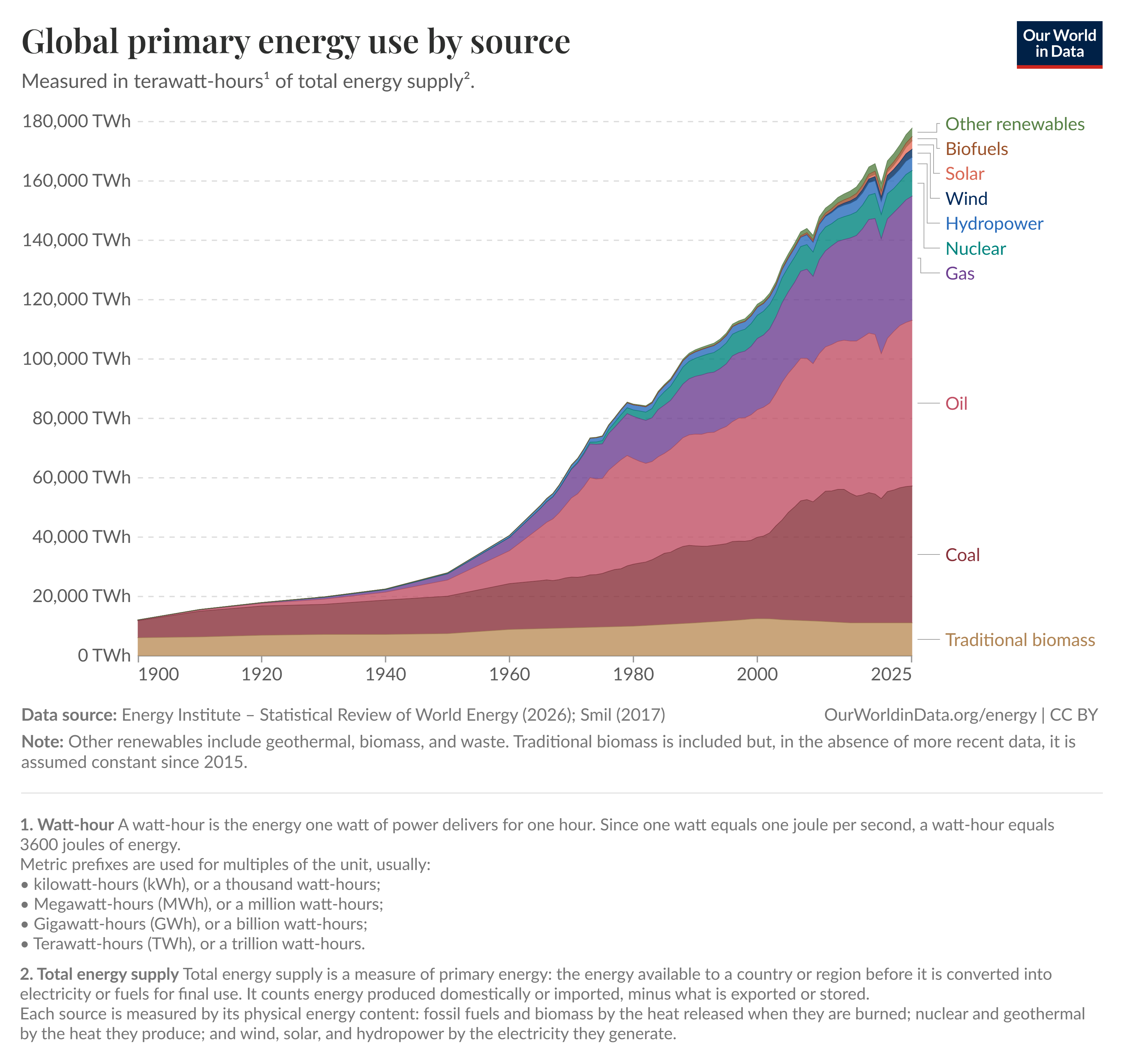
That’s not really the right question. No new energy technology has ever fully replaced a predecessor. We still have wood and coal show up on our energy charts. One thing we have to remember, geothermal produces electricity and heat. It will never replace crude oil which we use for plastics, lubricants, and gasoline. However it can take over gas’s job on the grid. It’s firm power around the clock. Last year gas produced 40% of US electricity.
Can we convert oil fields to geothermal fields?
This idea I love, but we need policy to make it work. Use the public land that the oil and gas companies have exhausted. They have roads, pads, power lines, and its disturbed land. But, most of the wells are too cool to reuse but we use land nearby and the land and the crews continue.
There are three ways in:
Co-production: tap the hot water active wells already bring up.
Retrofitting: reuse idle wells, though most are too cool.
Drilling deeper: sink new wells on land that’s already disturbed.
The law lets producing leaseholders add geothermal without bidding. Congress should extend that to fields winding down.
The good news is that the fix is cheap, and it mostly lines up with what the market already wants.
Here is what I’d propose to keep this intact and off new public land acres
Measure the water before the auction. Baseline monitoring of springs and aquifers is a small line item next to wells that cost millions apiece.
Lease near the wires. Bidders already pay extra to be near transmission lines. Steer sales toward disturbed private land along those lines, and conservation and the market point the same way.
Provide incentives to repurpose old oil and gas fields
Plan for water and quakes up front. Require a water plan for engineered projects in closed basins, and make “traffic-light” rules standard, so injection slows when small quakes appear.
Talk to tribes and communities before parcels are offered, and allow public comment prior to leasing.
Do that, and 2050 looks good. Geothermal supplies about 0.4% of U.S. electricity today. The Energy Department says 90 gigawatts or more is possible by 2050 if costs hit its targets. A more realistic 25 to 45 gigawatts would still be a big win: a firm, clean backbone under a West that runs on solar and storage.
The heat isn’t going anywhere. Whether the water does is up to us.
Thank you for reading! Wild places don’t come back. Conservation Current tracks the policies, projects, and decisions eating away at America’s public lands, and holds the energy industry accountable when it takes the easy path over the right one. I believe in clean energy and progress but it must be done ethically.
I write this, build this, and fund this myself. If you find any value in this, a coffee goes a long way.
Check out The Conservation Current Public Land Policy Tracker surfaces the five most impactful open comment periods and regulatory actions on federal public lands. Ranked by scale, irreversibility, and deadline urgency. Updated weekly. Always verify deadlines at regulations.gov before submitting.
Sources:
Fervo’s Cape Station first power (Sept. 2026)
https://www.stocktitan.net/news/FRVO/fervo-energy-achieves-first-power-at-cape-station-a-landmark-moment-mrvv88wvcy0t.html
Record Utah geothermal lease sale (Aug. 2026)
https://edit.doi.gov/pressreleases/record-24m-winning-bids-utah-geothermal-leases
https://www.thinkgeoenergy.com/blm-receives-record-breaking-24m-in-winning-bids-in-utah-geothermal-lease-sale/
Share of parcels sold at minimum bid, 2019 vs. 2026 (Enverus)
https://www.enverus.com/newsroom/new-mexico-geothermal-lease-sale-resets-federal-acreage-pricing/
Nevada geothermal lease sale, Oct. 20, 2026
https://www.thinkgeoenergy.com/blm-to-hold-nevada-geothermal-lease-sale-on-20-october-2026/
Geothermal’s share of U.S. electricity (EIA)
https://www.eia.gov/energyexplained/geothermal/use-of-geothermal-energy.php
Cape Station footprint: 631 acres, 148 on public land, up to 2 GW
https://www.utilitydive.com/news/interior-geothermal-fervo-energy-categorical-exclusion-nepa/730413/
https://www.publicpower.org/periodical/article/blm-approves-utah-geothermal-power-project
Solar land use per megawatt (Bloomberg, citing NREL data)
https://www.bloomberg.com/graphics/2021-energy-land-use-economy/
Cape Station capacity and buildout timeline
https://capestation.com/
https://ir.fervoenergy.com/news-releases/news-release-details/fervo-energy-reports-first-quarter-2026-results
Fervo well cost reductions
https://fervoenergy.com/fervo-energy-drilling-results-show-rapid-advancement-of-geothermal-performance/
Geothermal tax credits kept through 2033 (OBBBA)
https://www.canarymedia.com/articles/geothermal/enhanced-trump-bill-tax-credits
https://natlawreview.com/article/congress-phases-out-energy-tax-credits
Utah FORGE water recovery (~90%, so ~10% loss)
https://www.epri.com/research/products/000000003002034482
https://www.thinkgeoenergy.com/utah-forge-extended-circulation-test-confirms-egs-connectivity-and-heat-extraction/
Fervo cost of ~$7,000/kW (IPO filing)
https://www.canarymedia.com/articles/climatetech-finance/fervo-energy-geothermal-ipo-filing
DOE 2030 cost target and 90+ GW by 2050 (Pathways to Commercial Liftoff: Next-Generation Geothermal, 2024)
https://negpa.org/wp-content/uploads/2024/08/LIFTOFF_DOE_NextGen_Geothermal_v14.pdf
Natural gas ~40% of U.S. electricity (EIA data)
https://www.rigzone.com/news/where_will_usa_eps_electricity_generation_come_from_in_2025-22-jul-2025-181224-article/
Teapot Dome oil field geothermal power (Wyoming)
https://www.renewableenergyworld.com/?p=223578
Converting oil and gas wells: co-production and retrofitting (DOE Wells of Opportunity)
https://www.energy.gov/eere/geothermal/wells-opportunity
Most oil and gas wells too cool to reuse (Duke study, New Mexico)
https://doaj.org/article/0594f553831b4d0083eddf3eb18d0001
Law allowing noncompetitive geothermal leases for producing oil and gas leaseholders (Geothermal Steam Act)
https://www.govinfo.gov/content/pkg/USCODE-2020-title30/html/USCODE-2020-title30-chap23.htm
Bidders paying extra to be near transmission lines (Enverus)
https://www.enverus.com/newsroom/new-mexico-geothermal-lease-sale-resets-federal-acreage-pricing/